Ministry of Education, PM SHRI scheme
Introduction
Electricity is now one of the fastest-growing line items in a school budget. Fans and lights run through long summer terms, computer labs and smart classrooms have multiplied, and commercial or institutional tariffs keep climbing. For a mid-sized school, a monthly bill of ₹25,000 to ₹80,000 is ordinary; for a coaching centre running air-conditioned batches from morning to late evening, it can be higher still. Rooftop solar is the obvious answer, yet the first question every administrator asks is the same: who pays for it?
This is where the PM SHRI scheme enters the conversation. Launched by the Ministry of Education, it funds the upgrade of selected schools into exemplar institutions, and green-school infrastructure, including solar, is one of the things that funding can support. It is not a solar subsidy in the way many vendors describe it, and it is not open to everyone.
This guide explains what PM SHRI is, why solar is part of the green-school idea, who is eligible and who is not, the step-by-step application route, what a typical school system looks like, the mistakes worth avoiding, and the alternatives available to private coaching centres and unaided schools.
What is the PM SHRI Scheme?
PM SHRI stands for Pradhan Mantri Schools for Rising India. Approved by the Union Cabinet in September 2022, it is a centrally sponsored scheme that strengthens more than 14,500 existing schools across the country rather than building new ones. These schools are run by central government, state and UT governments, local bodies, and include Kendriya Vidyalayas and Navodaya Vidyalayas.
The total outlay announced for the scheme is ₹27,360 crore over the period from 2022-23 to 2026-27, with a central share of ₹18,128 crore. Government estimates place the direct beneficiary count at over 20 lakh students, with wider indirect benefit as selected schools mentor neighbouring institutions.
The purpose is to demonstrate the National Education Policy 2020 in practice: experiential and inquiry-based learning, modern pedagogy, better assessment, and infrastructure that supports both. Sustainability is written into the design. Each PM SHRI school is expected to become a green school that teaches environmental responsibility through the way the campus itself is run, which is exactly why solar appears on the list of eligible upgrades.
14,500+
Spread across every state and union territory, these existing government, state, and local-body schools — including Kendriya Vidyalayas and Navodaya Vidyalayas — are being strengthened rather than rebuilt, with a maximum of two schools selected per block through competitive evaluation.
₹27,360 cr
The scheme runs from 2022-23 to 2026-27, with the central government contributing ₹18,128 crore of the total cost. The remaining share comes from state and UT governments, funding everything from classroom upgrades to green-campus infrastructure like solar panels.
24×7 Uninterrupted Power
This figure reflects only the direct beneficiaries studying in selected PM SHRI schools. The actual reach extends further, as these institutions are expected to mentor and guide neighbouring schools, multiplying the scheme's educational and infrastructural impact over time.
Need help preparing your AGM solar presentation? Visit www.solarsmiths.com — free society consultations and custom savings reports.
Why Green School Status Includes Solar
A green school under PM SHRI is not defined by a single installation. It is a campus where energy, water, waste and curriculum all pull in the same direction. Solar is one pillar among several, and it is usually the most visible one.
The companion measures matter just as much during evaluation. LED retrofits cut the load your panels have to carry. Waste segregation and composting turn the canteen and garden into a teaching resource. Rainwater harvesting protects the borewell. Native planting and kitchen gardens give science lessons something living to work with. Water and energy conservation practices are expected to be adopted alongside the hardware.
This framing has a practical consequence for your application. Solar is funded as part of a broader school infrastructure and green-initiative grant. It is not a standalone solar subsidy with a fixed percentage attached, and no one can promise you a specific share of project cost in advance. Schools that present solar as one element of a costed, well-reasoned sustainability plan generally make a stronger case than those that submit a single vendor quotation and nothing else.
| Pillar | What It Involves |
|---|---|
| Rooftop Solar | Panels installed on the school roof to generate electricity on-site, reducing dependence on grid power and cutting long-term energy costs. |
| LED Lighting | Retrofitting classrooms and common areas with LED fixtures, lowering the overall electricity load that solar panels need to cover. |
| Waste Management | Waste segregation and composting systems that turn canteen and garden waste into a usable teaching resource for students. |
| Water Harvesting | Rainwater harvesting structures that recharge groundwater and protect the school's borewell from long-term depletion. |
| Green Cover | Native tree planting and kitchen gardens that improve campus microclimate and give science lessons a living, hands-on subject. |
| Eco Curriculum | Water and energy conservation practices woven directly into classroom teaching, linking campus infrastructure to everyday learning. |
Eligibility: Government Schools vs Private Coaching Centres
-
Stage one is the MoU:
The state or union territory must first sign a memorandum of understanding with the Centre, committing to implement NEP 2020 and the PM SHRI framework in full. This isn't a formality — it's a policy-level commitment that binds the state to specific curriculum, assessment, and infrastructure reforms. Nothing proceeds in a state that has not signed. As of now, a few states have held off or signed only conditionally, which means schools in those regions have no path into the scheme until their state government moves. If you're unsure of your state's status, this is the first thing to verify before investing time in an application. -
Stage two is UDISE+ benchmarking:
Schools that meet the minimum benchmark on UDISE+ parameters become eligible to compete. UDISE+ is the government's Unified District Information System for Education, capturing everything from student enrolment and teacher ratios to toilets, drinking water, and classroom infrastructure. Your enrolment, infrastructure and facility data must be current, because this database, not your application narrative, decides whether you clear the gate. Schools that haven't updated their UDISE+ records recently often find themselves screened out before the competitive stage even begins, regardless of how strong their actual campus is. Keeping this data accurate year-round, not just before an application window opens, is the practical takeaway here. -
Stage three is competitive evaluation:
Eligible schools apply on the PM SHRI portal, are scored against prescribed criteria covering infrastructure quality, academic outcomes, and readiness for green and digital upgrades, and are physically verified before final approval. A state-appointed team visits the campus to confirm that what's claimed on paper matches what exists on the ground. Selection is capped per block — a maximum of two schools, one elementary and one secondary — so strong schools can still miss out in a competitive district simply because another applicant scored marginally higher. This is why schools that treat the application as a one-time form-fill tend to underperform against those that build a genuinely competitive, well-documented case across multiple cycles.
- Non-MoU states caveat: few states have not signed the PM SHRI MoU. Schools there cannot be selected, regardless of how strong the school or the solar proposal is. Confirm your state's status with the district education office before spending time on an application.
-
Government & government-aided schools
-
- Eligible to compete under Challenge Mode
- Solar funded within the green-school component
- Requires state MoU and clean UDISE+ data
- Must include Kendriya Vidyalayas, Navodaya Vidyalayas, or state/local-body schools to qualify
- Selection capped at two schools per block (one elementary, one secondary)
- Physical verification required before final approval
- Must adopt full NEP 2020 framework, not just green-campus elements
- Schools must brand themselves with the "PM SHRI" prefix to continue receiving full funding
- Funding flows through existing channels like Samagra Shiksha, KVS, or NVS
- Ongoing compliance expected — not a one-time grant with no follow-up obligations
-
Private coaching centres
-
- Not eligible under PM SHRI
- Must use commercial or state routes instead
- Can explore PM Surya Ghar Muft Bijli Yojana if the building qualifies
- Eligible for state renewable energy subsidies for commercial buildings
- Can pursue CSR partnerships with corporates for sustainability funding
- May access discom net-metering to offset future electricity bills
- Can claim accelerated depreciation as a tax incentive on solar assets
- Often eligible for zero-down EMI plans repaid through electricity savings
- Should register as an MSME (if applicable) to unlock added state incentives
- To be unambiguous: Private coaching centres and commercial tutorial institutes are not eligible for PM SHRI funding. That does not mean solar is out of reach. Practical alternatives include PM Surya Ghar for eligible owner-occupied premises, state nodal agency subsidy programmes for institutional rooftops, CSR funding from corporates with an education or climate mandate, net metering to offset bills without any grant, and RESCO or EMI financing where a developer owns the plant and you simply buy the units.
Step-by-Step Application Process
-
Update your UDISE+ records
PM SHRI runs only in states and union territories that have signed the NEP 2020 MoU. Check status before investing effort. New states can sign on later phases too, so re-check periodically. -
Update your UDISE+ records
Selection is driven by UDISE+ data. Enrolment, infrastructure, teacher and facility fields must be complete and accurate for the current year. Keep this updated year-round, not just before a cycle opens. -
Watch for the Challenge Mode window
Application windows are announced on the PM SHRI portal by the state or district office. Registration is done by the school through the portal. Windows can be short, so check regularly. -
Submit the school's application
Fill in the prescribed parameters and upload supporting documents. Self-declared claims are verified physically later, so accuracy matters more than persuasive framing. -
Clear district and state verification
Shortlisted schools are inspected and scored, with final selection approved by the Project Approval Board. Visits can be lightly announced, so campuses should stay inspection-ready. -
Get your components sanctioned
Once selected, the school prepares an annual plan, with solar proposed as a line item within the green-school component. A clear cost breakdown speeds up sanction. -
Procure and install
Follow state procurement rules, use ALMM-listed modules and an empanelled vendor, and apply for net metering with the DISCOM in parallel to save time. -
Commission, brand and report
Complete DISCOM inspection, display mandatory PM SHRI branding, and report progress and utilisation as required — this is an ongoing compliance step, not a one-time task.
Two details deserve emphasis. First, procurement must follow your state’s financial rules; an informal arrangement with a familiar vendor will not survive audit. Second, PM SHRI branding is a condition, not a courtesy. Selected schools are required to display the scheme identity on the campus and on funded assets, and utilisation reporting follows the same discipline. Build both into your project plan from day one rather than scrambling at the inspection stage.

Typical Solar Setup for Schools
Most school campuses land between 5 kW and 15 kW. A 5 kW plant suits a small primary school with lights, fans and a few computers. A 10 kW to 15 kW plant fits a higher-secondary school with labs, a server room and multiple smart classrooms. Larger campuses with hostels, administrative blocks, or multiple buildings may need a phased approach — starting with the highest-consumption block and expanding capacity in subsequent budget cycles rather than sizing for the entire campus at once. Roughly 80 to 100 square feet of shadow-free roof is needed per kilowatt, so a shading assessment — accounting for water tanks, adjoining buildings, and tree cover — should happen before any system size is finalised, not after.
Primary
Mid-size
Higher-Secondary
| Configuration | Details |
|---|---|
| On-Grid (Default) | Simplest and cheapest configuration. With net metering, surplus generated during vacations is exported and credited against later bills — especially useful given long academic breaks. |
| Hybrid + Battery | Costs meaningfully more, but suits schools where supply is unreliable and continuity matters — such as during board exams, computer-based testing, or sensitive lab equipment use. |
| Payback | Depends on tariff and consumption pattern, so treat any single figure with caution. Institutional rooftop projects in India typically recover cost over several years, after which generation is close to free for the remaining panel life, which commonly runs 20 to 25 years. Consumption patterns also shift as schools add computer labs, air conditioning, or digital classrooms, so it's worth sizing the system with some headroom for growth rather than only matching current load exactly. |
Maintenance Tip: Budget for an annual maintenance contract covering module cleaning, inverter checks, earthing and generation monitoring. Dust is the quiet thief of output, and a school roof collects plenty of it — between construction dust, bird activity, and monsoon residue, uncleaned panels can lose a noticeable share of their output within a few months. A basic monitoring app or dashboard, even a simple one, also helps school staff catch underperformance early rather than discovering it months later through an unusually high bill.
- Solar vs FD vs Mutual Funds: How to Get the Best Returns on ₹5 Lakh Compares solar investment with FDs and mutual funds to find the best returns on a ₹5 lakh investment.
-
Explore our solar school case studies to see how educational institutions can reduce electricity costs and adopt reliable solar power solutions.
Common Mistakes Schools Make
- Treating PM SHRI as a direct solar subsidy scheme rather than a whole-school grant with a green component, which leads schools to expect a fixed solar-specific allocation that doesn't actually exist.
- Applying with outdated or incomplete UDISE+ data, which quietly removes the school from shortlisting before the competitive evaluation stage is even reached, without any explicit rejection notice.
- Sizing the plant on connected load instead of actual consumption, leaving expensive capacity idle over holidays and inflating upfront costs for a system that's rarely used at full capacity.
- Skipping the net-metering application until after installation, delaying commissioning by weeks since DISCOM approval and inspection can't run parallel to construction if filed late.
- Choosing the lowest quote with no AMC, no ALMM-listed modules and no written performance warranty, which often costs more in downtime and replacements than it saves upfront.
- Forgetting the branding, reporting and utilisation obligations attached to central funds, risking future funding eligibility even after the installation itself is complete.
A practical guide for housing societies looking to switch to solar power together.
Get your personalised cost estimate: www.solarsmiths.com
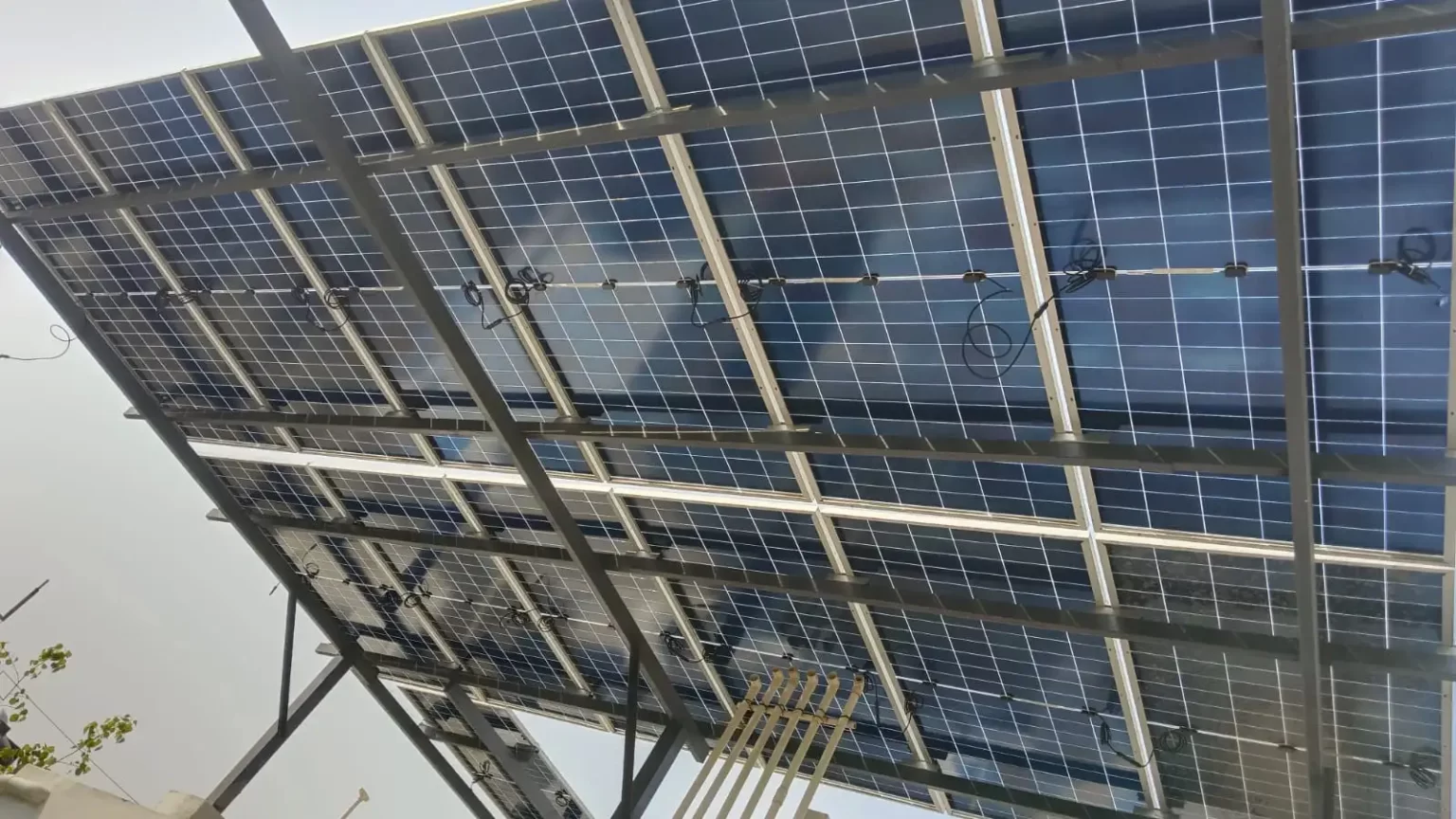
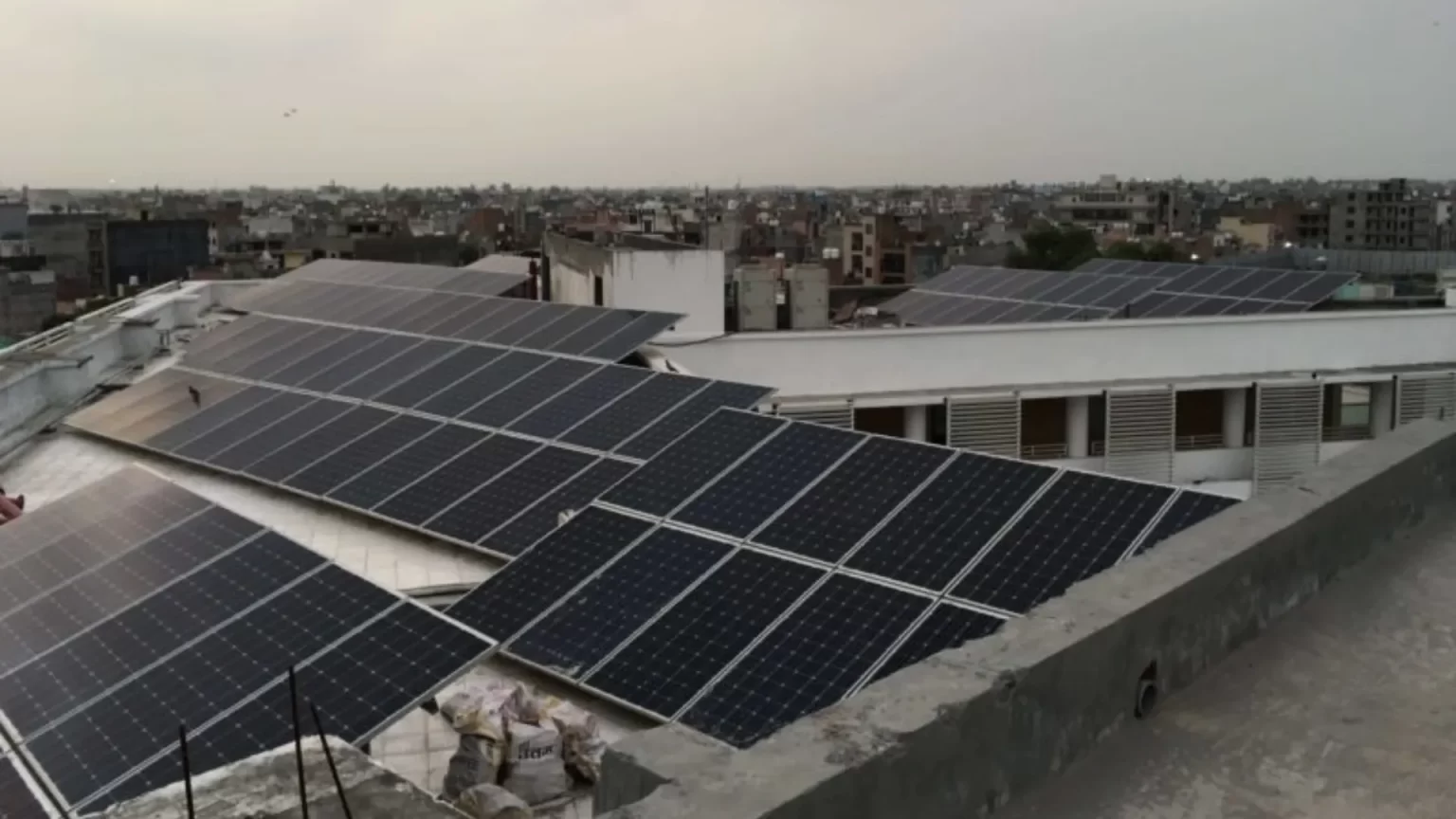
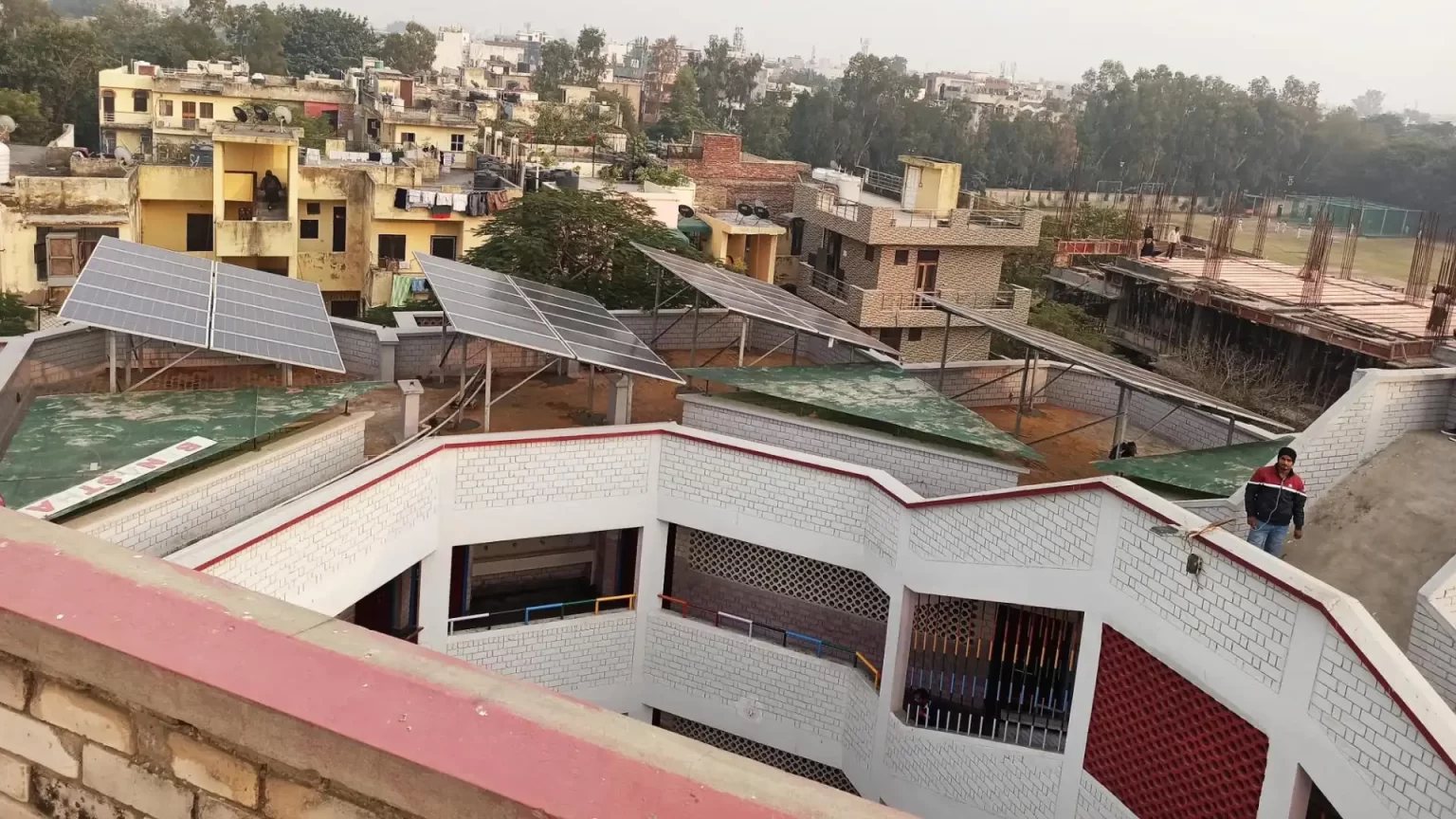

Alternative Funding Routes
PM Surya Ghar
Residential-focused, but relevant for owner-occupied premises. Eligible buildings can access subsidised capital costs and simplified approval.
State subsidies
SNAs handle subsidy disbursal" (dropping "and tracking" gets you to 4 words) — or if you want to keep "tracking" in some form: "SNAs manage subsidy tracking
CSR funding
Corporates fund school solar as an education and climate initiative, often through NGO partnerships or direct sponsorship.
Net metering
Exports offset bills without any grant at all, working alongside any other funding route already in place.
RESCO / EMI
Zero-capex models: pay per unit or in instalments, shifting ownership and maintenance responsibility to a third party.
Frequently Asked Questions
No. PM SHRI covers schools run by central, state, UT and local bodies, plus KVs and NVs. Commercial coaching institutes are outside its scope entirely.


